John Keats’s celebrated poem, readily available as a PDF, delves into enduring artistic themes; Numerous online resources offer convenient downloads for scholarly study.
Digital copies facilitate access to this cornerstone of Romantic literature, allowing readers to explore its rich imagery and complex ideas with ease.
Researchers and students alike benefit from the widespread availability of the poem in a portable document format, enhancing academic engagement.
The poem’s textual integrity is preserved in these PDF versions, ensuring accurate analysis and interpretation for generations of literary enthusiasts.
Exploring the poem through a PDF allows for focused annotation and close reading, deepening understanding of Keats’s masterful craftsmanship.
Historical Context of the Poem
Composed in May 1819, “Ode on a Grecian Urn” emerged during a period of significant personal and artistic upheaval for John Keats. He was grappling with illness, financial instability, and the recent loss of his brother, Tom, to tuberculosis.
The poem reflects the Romantic era’s fascination with classical antiquity, particularly Greek art and mythology. Keats, like many of his contemporaries, sought inspiration in the perceived harmony and ideal beauty of the ancient world.
Interestingly, the poem’s creation coincided with a surge in archaeological discoveries, bringing Greek artifacts – including urns – to public attention in England. While the specific urn inspiring Keats remains debated, its existence fueled the artistic imagination.
The readily available PDF versions of the poem allow modern readers to contextualize it within this historical milieu, appreciating the interplay between personal experience and broader cultural trends.
Availability of the Poem in PDF Format
Numerous online platforms offer “Ode on a Grecian Urn” in PDF format, ensuring widespread accessibility for students, researchers, and poetry enthusiasts. Websites dedicated to classic literature, like Project Gutenberg and Poetry Foundation, host downloadable versions.
Academic institutions frequently provide PDF copies through their digital libraries and course materials. A quick search yields results from university websites and online learning platforms.
Furthermore, several sites specialize in literary analysis and offer annotated PDF versions, enhancing comprehension. These often include critical essays and contextual information alongside the poem’s text.
Downloading the poem as a PDF allows for offline reading, annotation, and convenient portability. It’s a practical format for in-depth study and literary exploration, readily available today.
The Text of “Ode on a Grecian Urn”
Keats’s evocative verses, easily accessed as a PDF, begin with the iconic line: “Thou still unravish’d bride of quietness.”
The complete poem unfolds through vivid descriptions and philosophical inquiries, readily available for study.
First Stanza: The Unravished Bride
The opening stanza, readily found within any PDF version of the poem, introduces the urn as an “unravish’d bride of quietness,” a captivating image of untouched beauty.
This personification establishes a tone of reverence and mystery, hinting at the enduring power of art to transcend time and experience.
Keats describes the urn as a “foster-child of silence and slow time,” emphasizing its timeless quality and its role as a silent observer of human history.
The “sylvan historian” epithet further solidifies the urn’s position as a keeper of stories, capable of conveying narratives through its sculpted forms.
This initial depiction sets the stage for the poem’s exploration of art’s ability to capture and preserve moments of fleeting beauty, offering a glimpse into an idealized world.
The stanza’s lyrical language and evocative imagery immediately draw the reader into the poem’s contemplative atmosphere.
Second Stanza: The Figures on the Urn
The second stanza, easily accessible in any PDF of Keats’s “Ode,” shifts focus to the dynamic scenes depicted on the urn’s surface, specifically a group engaged in revelry.
Keats vividly portrays “mad ecstasy” and “forest branches” suggesting a wild, untamed energy frozen in time, a snapshot of perpetual joy.
He questions the meaning of this ecstatic pursuit, wondering what god or passion drives these figures, yet acknowledges their eternal youthfulness.
The stanza highlights the contrast between the fleeting nature of human experience and the enduring permanence of art, as embodied by the urn’s sculpted figures.
This section emphasizes the poem’s central theme: the power of art to capture and preserve moments of beauty and passion, defying the constraints of mortality.
The detailed descriptions within the PDF allow for a closer examination of Keats’s masterful imagery.
Third Stanza: The Pursuit and the Unattainable
The third stanza, readily found within any “Ode on a Grecian Urn” PDF, centers on a scene of passionate pursuit – a lover attempting to kiss his beloved, yet forever separated by distance.
Keats explores the frustration of desire, noting the lover’s “struggle to kiss” and the beloved’s unchanging beauty, eternally on the verge of fulfillment.
He contrasts this unattainable bliss with the transient nature of human passion, suggesting the urn’s figures are fortunate in their perpetual, yet unconsummated, longing.
The stanza highlights the poem’s exploration of the tension between desire and reality, and the allure of an idealized, unchanging world.
Analyzing this stanza through a PDF version allows for careful consideration of Keats’s nuanced language and symbolic representation of longing.
This section underscores the poem’s enduring power to evoke complex emotions.
Themes Explored in the Poem
Keats’s “Ode on a Grecian Urn,” accessible as a PDF, profoundly examines beauty, truth, mortality, and art’s enduring power.
The poem contemplates the relationship between transient life and eternal artistic representation, sparking timeless philosophical inquiry.
Beauty and Art
Central to Keats’s “Ode on a Grecian Urn,” readily available as a PDF, is the exploration of beauty and its connection to art. The urn itself embodies an idealized, frozen beauty, a perfection unattainable in the fleeting world of human experience.
The poem suggests that art, unlike life, is immune to decay and change, offering a timeless and enduring form of beauty. The figures depicted on the urn—lovers, musicians, and dancers—represent an eternal present, forever caught in moments of blissful potential.
Keats contrasts this artistic perfection with the transient nature of human passion and joy, highlighting art’s capacity to transcend mortality. The PDF format allows for close study of the poem’s language, revealing how Keats uses vivid imagery to celebrate the power of art to capture and preserve beauty for all time.
Truth and Reality
Keats’s “Ode on a Grecian Urn,” easily accessed as a PDF, profoundly questions the nature of truth and reality. The urn presents an idealized world, a constructed reality distinct from the complexities and imperfections of lived experience.
The poem explores whether this artistic truth—beautiful and harmonious—is superior to the often-painful truths of the real world. The figures on the urn exist in a perpetual state of becoming, forever on the verge of fulfillment, yet never fully realizing their desires.
Through careful analysis of the poem, available in PDF format, readers can discern Keats’s contemplation of whether art offers a more profound or authentic truth than the transient realities of human life. The urn’s silence becomes a powerful symbol of this elusive truth.
Mortality and Immortality
Keats’s “Ode on a Grecian Urn,” conveniently found as a PDF, deeply contemplates the contrast between human mortality and artistic immortality. The poem highlights the fleeting nature of life, with its inevitable decay and loss, juxtaposed against the enduring permanence of art.
The figures depicted on the urn are frozen in time, eternally youthful and vibrant, escaping the ravages of age and death. This artistic preservation offers a form of immortality, a transcendence of earthly limitations.
Analyzing the poem – readily available in PDF versions – reveals Keats’s exploration of whether art can provide a lasting refuge from the inevitability of mortality, offering a glimpse of eternal beauty and truth;

Analyzing the Imagery
Keats’s poem, accessible as a PDF, brims with vivid imagery. Detailed analysis of the urn’s depictions reveals profound symbolic meaning and artistic intention.
The Grecian Urn as a Symbol
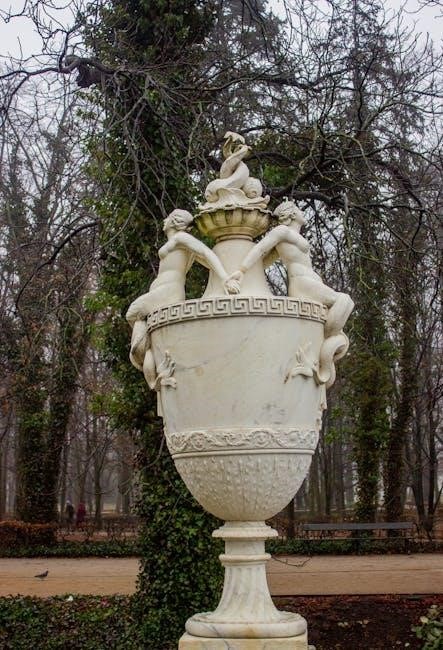
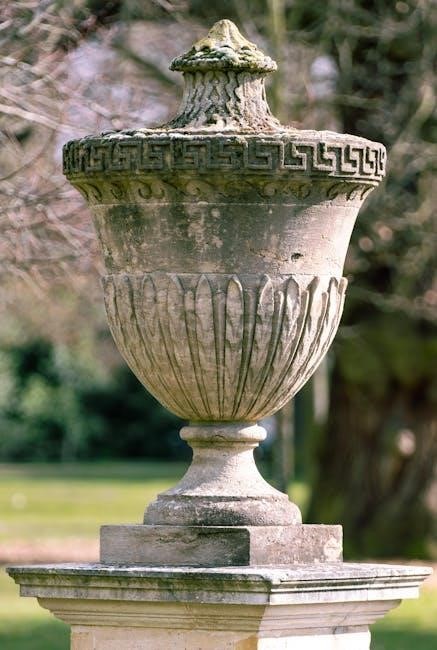
The Grecian urn, central to Keats’s poem – often studied via readily available PDF versions – transcends its material form to become a potent symbol of art’s enduring power. It represents a realm of ideal beauty, frozen in time, offering a refuge from the fleeting nature of human life and experience.
As a static object, the urn encapsulates moments of potential, like the unravished bride or the pursuit of lovers, forever poised on the brink of fulfillment. This immutability contrasts sharply with the transient world, highlighting art’s capacity to preserve and immortalize beauty. The PDF format allows for close examination of the poem’s language, revealing how Keats meticulously crafts this symbolic resonance.
Furthermore, the urn embodies a harmonious blend of form and content, mirroring the artistic ideal Keats champions. Its circular shape suggests wholeness and eternity, reinforcing the poem’s exploration of timeless truths.
Imagery of Nature and Pastoral Life
Keats’s “Ode on a Grecian Urn,” easily accessible in PDF format, is richly imbued with imagery of nature and pastoral life, evoking a sense of idyllic beauty and tranquility. Descriptions of trees, flowers, and the countryside create a vibrant backdrop for the scenes depicted on the urn.
The poem’s pastoral elements – pipes, wild ecstasy, and the pursuit of lovers – suggest a harmonious relationship between humanity and the natural world. These images, readily analyzed through digital PDF copies, contribute to the poem’s overall theme of timeless beauty and artistic perfection.

The natural world on the urn isn’t merely decorative; it’s integral to the unfolding narratives, symbolizing vitality, growth, and the cyclical rhythms of life. Studying the poem via PDF allows for detailed examination of these evocative descriptions.
The Depiction of Figures and Scenes
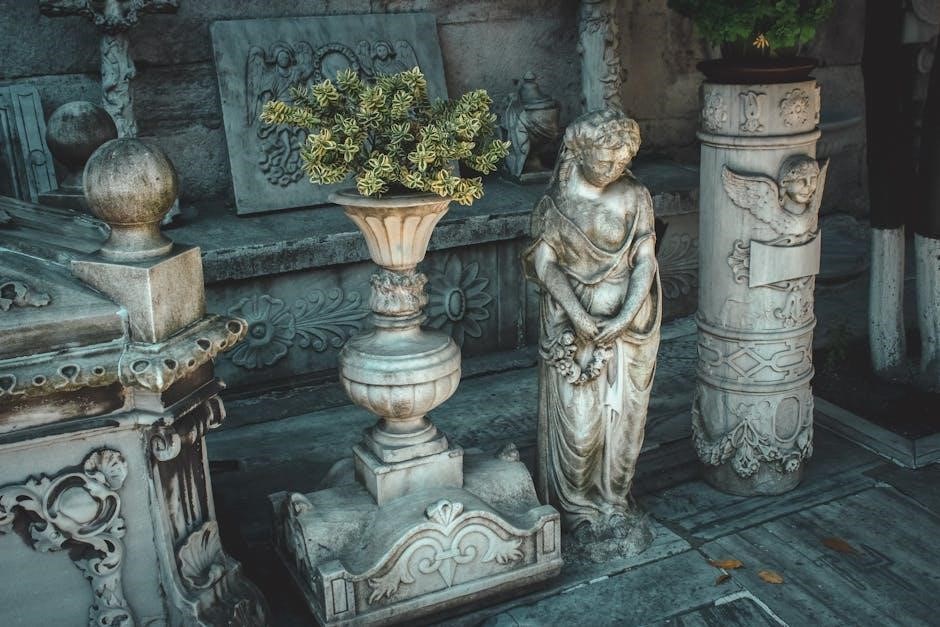
Keats’s “Ode on a Grecian Urn,” conveniently found as a PDF, meticulously depicts various figures and scenes frozen in time on the urn’s surface. The poem focuses on a bridal procession, figures engaged in revelry, and a scene of sacrifice, all rendered with vivid detail.
These depictions, easily studied through digital PDF versions, aren’t static; Keats imbues them with a sense of dynamic energy and untold stories. The “unravished bride” and the passionate lovers exemplify this captivating portrayal of human experience.
Analyzing the poem via PDF allows for close examination of how Keats uses these figures to explore themes of beauty, desire, and the tension between art and life. The urn’s scenes become a meditation on the enduring power of artistic representation.
Literary Devices Used by Keats
Keats masterfully employs apostrophe, metaphor, and alliteration within the poem, readily accessible as a PDF. These techniques enrich the text’s aesthetic impact.
Studying the PDF reveals how these devices contribute to the poem’s exploration of beauty and timelessness, enhancing its artistic depth.
Use of Apostrophe
Keats frequently utilizes apostrophe throughout “Ode on a Grecian Urn,” directly addressing the urn as if it were a person capable of understanding. This technique, easily observed within a PDF version of the poem, imbues the inanimate object with a sense of life and agency.
The opening lines, “Thou still unravish’d bride of quietness,” exemplify this direct address, establishing a conversational tone and inviting contemplation. By speaking to the urn, Keats isn’t merely describing it; he’s engaging in a dialogue, seeking answers to profound questions about art, beauty, and mortality.
This literary device allows Keats to explore the urn’s symbolic significance, prompting readers to consider its enduring power and the stories it silently holds. Accessing the poem as a PDF facilitates close reading, highlighting the consistent and impactful use of apostrophe.
Metaphor and Simile
Keats masterfully employs metaphor and simile in “Ode on a Grecian Urn,” enriching the poem’s imagery and thematic depth, readily apparent when studying a PDF copy. The urn itself functions as an extended metaphor for the enduring power of art, contrasting with the fleeting nature of human life.
Similes, such as comparisons subtly woven into descriptions of the figures, enhance the vividness of the scenes depicted. These comparisons allow readers to visualize the artwork and connect with the emotions it evokes. A PDF format allows for focused annotation of these figures of speech.
Through these devices, Keats explores the relationship between art and reality, suggesting that art can offer a glimpse of eternal beauty and truth. Careful examination within the PDF reveals the precision and artistry of Keats’s language.
Alliteration and Assonance
Keats skillfully utilizes alliteration and assonance within “Ode on a Grecian Urn,” contributing to the poem’s musicality and emotional resonance, easily observed when analyzing a PDF version. The repetition of consonant sounds (alliteration) creates a sense of flow and emphasis, drawing attention to key phrases.
Assonance, the repetition of vowel sounds, further enhances the poem’s lyrical quality, creating a harmonious effect. These sonic devices work together to immerse the reader in the poem’s atmosphere, making the imagery more vivid and memorable. A PDF allows for close reading of these sound patterns.
These techniques underscore the poem’s themes of beauty and permanence, reinforcing the idea that art transcends time. Studying the poem’s soundscape through a PDF reveals Keats’s mastery of poetic form.

The Urn’s Influence and Inspiration
Scholars debate the specific urn inspiring Keats, accessible via PDF, yet classical influences are undeniable. Digital resources aid exploration of these artistic roots.
The Question of a Specific Urn
Despite extensive research, the precise Grecian urn that sparked Keats’s imagination remains elusive, though readily available in PDF format for study. Many readers have long pondered the actual artifact inspiring the poem’s vivid descriptions, seeking a tangible link to Keats’s artistic vision.
Some speculate about various urns in the British Museum’s collection, while others suggest it was a composite image formed from multiple sources; However, conclusive evidence proving a direct correlation to a single urn has yet to surface. The poem’s power lies not necessarily in its depiction of a specific object, but rather in its exploration of universal themes through the symbolic representation of art itself, easily accessed through a PDF download.
Ultimately, the ambiguity surrounding the urn’s identity enhances the poem’s enduring mystique and invites ongoing interpretation.
Classical Influences on Keats
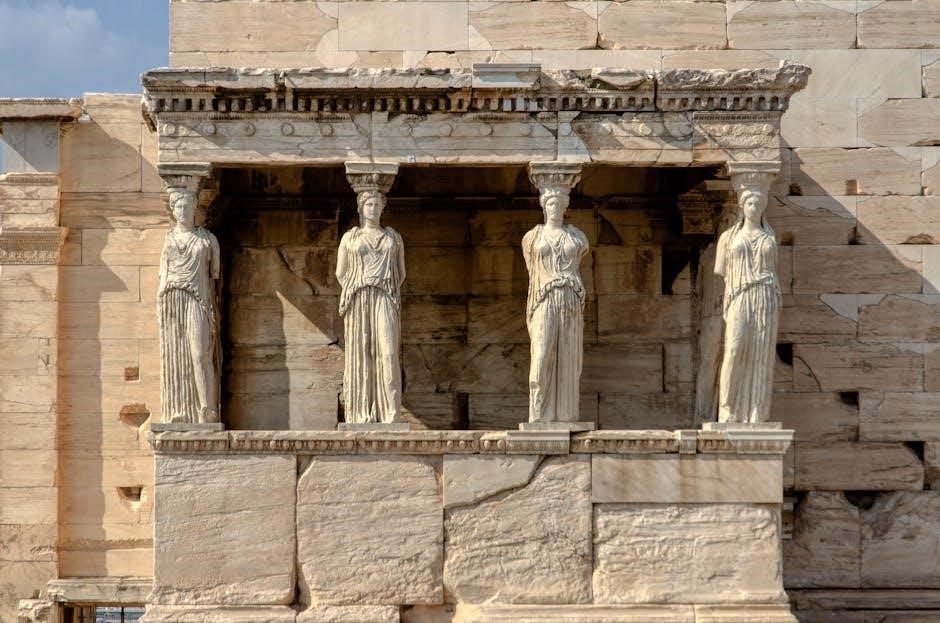
Keats, deeply immersed in classical literature and art, drew heavily from ancient Greek aesthetics, readily available for study in PDF form. His fascination with Greek mythology, history, and philosophy permeates “Ode on a Grecian Urn,” shaping its themes and imagery.
The poem’s references to pastoral scenes, deities, and artistic forms echo the classical tradition, reflecting Keats’s scholarly pursuits. He sought to emulate the beauty and harmony of ancient art, believing it held timeless truths. Accessing the poem as a PDF allows for detailed examination of these allusions.
Keats’s engagement with classical texts informed his poetic style and his exploration of enduring human concerns, solidifying the poem’s place within the Romantic movement.
Critical Reception and Interpretations
Scholarly analyses, often found alongside PDF versions, reveal diverse interpretations of Keats’s ode. Early reviews sparked debate, while modern critics explore its complex themes.
Early Reviews of the Poem
Initial responses to “Ode on a Grecian Urn,” often encountered when accessing the poem in PDF format, were surprisingly mixed. While some contemporaries recognized Keats’s burgeoning talent, others found the poem obscure or overly sentimental.
Leigh Hunt, a prominent critic of the time, offered qualified praise, acknowledging the poem’s beauty but questioning its philosophical depth. John Gibson Lockhart, in a scathing review for Blackwood’s Magazine, dismissed Keats’s work as effeminate and lacking substance.
These early critiques, often available in collections accompanying digital PDF editions, highlight the poem’s initial struggle for acceptance. The poem’s complex symbolism and unconventional structure challenged prevailing poetic norms, leading to polarized opinions.
However, even negative reviews acknowledged Keats’s lyrical skill, foreshadowing the poem’s eventual recognition as a masterpiece of English literature.
Modern Critical Perspectives
Contemporary scholarship, readily accessible alongside PDF versions of the poem, views “Ode on a Grecian Urn” through diverse lenses. New Criticism emphasizes the poem’s internal coherence and intricate use of imagery, analyzing it as a self-contained aesthetic object.
Poststructuralist readings challenge the notion of a fixed meaning, exploring the poem’s ambiguities and the instability of language. Feminist critics examine the representation of women on the urn, questioning the male gaze and patriarchal structures.
Psychoanalytic interpretations delve into Keats’s subconscious desires and anxieties, linking the poem’s themes to his personal life. Digital archives containing critical essays alongside the PDF text facilitate these varied approaches.
Ultimately, modern criticism celebrates the poem’s enduring complexity and its capacity to generate new insights.
Finding and Downloading the PDF
Numerous online repositories offer free PDF access to Keats’s “Ode on a Grecian Urn,” ensuring easy availability for students and enthusiasts.
Reliable sources include university websites and digital libraries, providing legally sound and high-quality PDF downloads.
Reliable Sources for the PDF Version
Locating a trustworthy PDF version of Keats’s “Ode on a Grecian Urn” is crucial for academic integrity and accurate study. Several reputable online platforms consistently provide reliable access.
Project Gutenberg (gutenberg.org) offers a free, meticulously proofread digital edition, ensuring textual fidelity. Bartleby.com is another excellent resource, hosting a collection of classic English literature, including Keats’s ode, in PDF format.
University library websites, such as those from Harvard or Oxford, often provide downloadable PDFs of scholarly editions. Internet Archive (archive.org) also contains digitized copies, though verifying the source’s legitimacy is advisable.
Always prioritize sources with clear copyright information and established academic reputations to guarantee the authenticity and legality of the PDF you download.
Legality and Copyright Considerations
“Ode on a Grecian Urn,” penned in 1819, resides firmly within the public domain. This means the poem itself is free from copyright restrictions in most jurisdictions, allowing for legal PDF downloads and distribution.
However, specific editions or annotations accompanying the poem may still be protected by copyright. Be mindful of the source when downloading a PDF; avoid those offering unauthorized reproductions of scholarly introductions or critical analyses.
Reputable sources like Project Gutenberg and university archives generally provide legally sound PDF versions. Downloading from unofficial websites carries a risk of copyright infringement and potential malware.
Always verify the terms of use and copyright notices associated with any PDF before downloading or sharing it, ensuring compliance with intellectual property laws.
“Ode on a Grecian Urn” in Academic Study
Keats’s ode, often assigned as a PDF, fuels rich literary discussions. Students analyze its themes, imagery, and form, fostering critical thinking skills.
Common essay topics explore beauty, truth, and mortality, utilizing the poem’s accessible PDF format for close textual analysis.
The poem’s enduring relevance ensures its continued presence in literature curricula, readily available through digital PDF resources.
Instructors leverage the poem’s concise length and complex ideas, making the PDF version ideal for in-depth classroom exploration.
Use in Literature Courses
John Keats’s “Ode on a Grecian Urn” consistently appears on syllabi across high school and university literature courses. Its relatively short length, coupled with profound thematic depth, makes it an ideal text for focused analysis.
Instructors frequently utilize the poem to introduce students to Romantic poetry, emphasizing Keats’s masterful use of imagery, symbolism, and sensory detail. The readily available PDF format streamlines classroom distribution and facilitates student annotation.
Discussions often center on the poem’s exploration of beauty, truth, mortality, and the enduring power of art. Students are encouraged to examine the tension between the idealized world depicted on the urn and the transient nature of human existence. The PDF allows for easy reference during debates.
Assignments commonly include close reading exercises, analytical essays, and comparative studies, all benefiting from the convenient accessibility of the poem in PDF form.
Common Essay Topics and Analysis
“Ode on a Grecian Urn” inspires diverse analytical essays, frequently exploring the poem’s central themes; Students often analyze the contrast between art’s permanence and life’s fleeting nature, supported by textual evidence easily accessible in PDF versions.
Another common topic examines Keats’s use of imagery, particularly the vivid depictions of the urn’s scenes and their symbolic significance. The PDF format allows for detailed annotation and close reading of specific passages.
Essays also delve into the poem’s exploration of beauty and truth, questioning whether the idealized world on the urn represents a higher reality or a deceptive illusion. Access to the poem as a PDF streamlines research.
Comparative analyses, contrasting Keats’s ode with other Romantic works, are also prevalent, benefiting from the poem’s widespread availability in digital format.