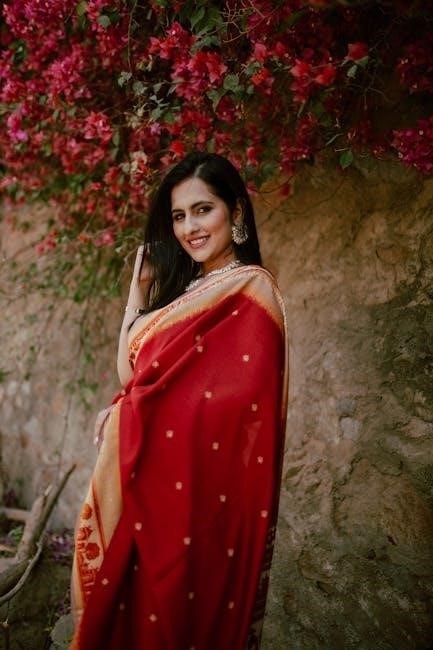
Saree Blouse Measurement Chart PDF: A Comprehensive Guide
Saree blouse measurement charts in PDF format are vital tools for selecting the correct size, whether shopping online or tailoring a custom fit.
Understanding the Importance of Accurate Measurements
Accurate measurements are absolutely crucial when it comes to saree blouses, directly impacting the garment’s fit and overall aesthetic. A poorly fitted blouse can detract from the beauty of even the most exquisite saree.
Utilizing a saree blouse measurement chart PDF ensures a tailored look, avoiding costly alterations or the disappointment of an ill-fitting garment. Precise measurements – bust, waist, hips, shoulder width, and length – guarantee comfort and confidence.
Whether purchasing online or commissioning a custom-made blouse, accurate data is essential. It allows for a seamless shopping experience and a final product that perfectly complements your body shape and the saree’s design. Ignoring this step can lead to significant frustration and a compromised look.
Why Use a Saree Blouse Measurement Chart PDF?
A saree blouse measurement chart PDF offers a structured and convenient way to determine your precise size, eliminating guesswork. It’s particularly useful when shopping online where trying on isn’t possible, or when communicating measurements to a tailor.
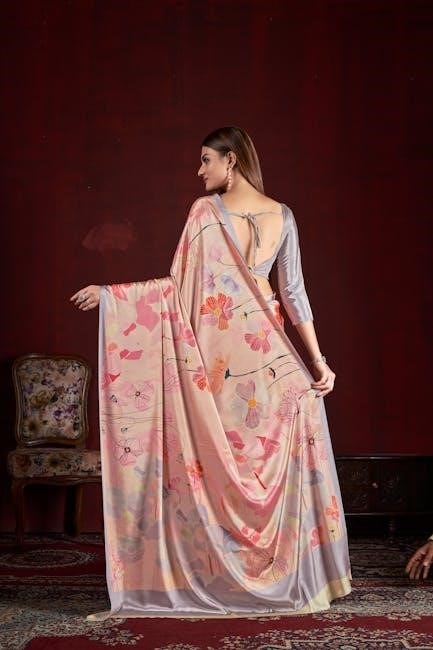
These charts provide a comprehensive list of key measurements, ensuring all necessary dimensions are considered for a perfect fit. They act as a guide for both standard and customized blouse designs, catering to diverse body types.
The PDF format allows for easy saving, printing, and sharing with tailors or online retailers. It’s a portable and accessible tool, ensuring consistency and accuracy throughout the blouse selection or creation process, ultimately saving time and money.
Benefits of a PDF Format
The PDF format for a saree blouse measurement chart offers several key advantages. PDFs ensure consistent formatting across different devices and operating systems, preventing measurement discrepancies due to display variations.
They are easily downloadable and printable, allowing for convenient access during fittings or when communicating with tailors. PDFs are also highly portable – you can store them on your phone, tablet, or computer for quick reference.
Furthermore, PDFs are generally secure and prevent accidental alterations to the crucial measurement data. This ensures accuracy and reliability throughout the blouse-making process, leading to a better-fitting garment and a more satisfying experience.

Key Measurements for a Saree Blouse

Essential measurements include bust, waist, hips, shoulder width, back neck depth, and sleeve length, all crucial for a well-fitted saree blouse.
Bust Measurement
Accurate bust measurement is paramount for a comfortable and flattering saree blouse fit. This measurement is typically taken around the fullest part of the bust, ensuring the tape measure is level all around the body.
It’s crucial to breathe normally and avoid pulling the tape too tightly or leaving it too loose. The bust measurement directly impacts the blouse’s overall fit and shape, influencing how the saree drapes.
Many PDF charts will request two bust measurements: one for a fitted blouse and another adding a few inches for a looser, more comfortable feel. Consider your personal preference and the blouse style when deciding which measurement to use.
Remember to note whether the chart requires the measurement in inches or centimeters!
Waist Measurement
Precisely determining your waist measurement is essential for a well-fitted saree blouse. Locate your natural waistline – typically the narrowest part of your torso, usually an inch or two above your belly button.
Keep the tape measure comfortably snug, not too tight, and ensure it remains level around your body. Breathe normally during measurement to avoid constricting or altering your natural waist size.
The waist measurement influences the blouse’s silhouette and how it complements the saree. PDF charts often use this measurement to determine the blouse’s cut and style.
Some charts may ask for waist measurement at the natural waist, while others might request it at the level where the blouse will sit. Always clarify!
Hip Measurement
Accurate hip measurement is crucial, especially for saree blouses with flared designs or those intended to sit on the hips. Stand with your feet together and measure around the fullest part of your hips and buttocks.
Ensure the tape measure is level, running parallel to the floor, and isn’t too tight. A comfortable, but snug fit is ideal. This measurement impacts the blouse’s drape and overall fit, preventing it from being too restrictive or loose.
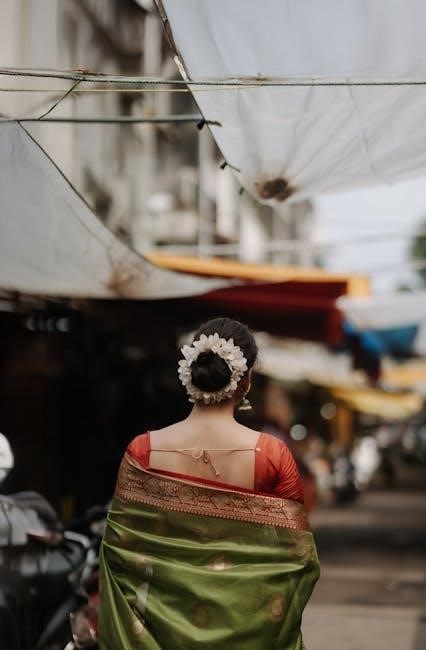
PDF charts utilize hip measurements to determine the blouse’s shape and ensure a flattering silhouette. Variations in hip size necessitate adjustments to the blouse’s pattern.
Consider whether you’ll be wearing padding or shapewear when taking this measurement for the most accurate result.
Shoulder Measurement
Precise shoulder measurement is fundamental for a well-fitted saree blouse, impacting sleeve placement and overall comfort. Measure from the edge of one shoulder (where a blouse seam would sit) across the back to the edge of the other shoulder.
Keep the tape measure straight and relaxed, avoiding pulling it too tightly. This measurement determines the blouse’s width across the upper back and shoulders, preventing a too-tight or drooping fit.
PDF charts use shoulder measurements to establish the blouse’s yoke and ensure the sleeves are appropriately positioned. Variations in shoulder width require pattern adjustments for a seamless look.
Ensure your arms are relaxed and down at your sides during measurement for accuracy.
Back Neck Depth
Determining the back neck depth is crucial for blouse comfort and style, influencing how the blouse sits and the overall neckline appearance. This measurement is taken from the base of the neck, at the spine, down to where you desire the blouse to end at the back.
PDF charts typically offer standard depths, but customization is key. A deeper back neck is suitable for showcasing elaborate saree designs, while a higher depth provides more coverage;
Consider your comfort level and the saree’s design when deciding on the depth. Accurate measurement prevents chafing or an unflattering fit.
Ensure you are standing straight and relaxed during measurement for the most accurate result.
Sleeve Length
Accurate sleeve length measurement is vital for a well-fitted saree blouse, impacting both comfort and aesthetic appeal. This is measured from the shoulder point, down the arm, to the desired sleeve hem length.
PDF charts usually detail various standard lengths, catering to diverse preferences. Common options include sleeveless, short sleeves, elbow-length, and full sleeves.
Consider the saree’s style and your personal preference when choosing a length. A PDF chart will often provide guidance on which lengths complement different saree types.
Ensure your arm is slightly bent when measuring for a natural fit, avoiding a too-tight or restrictive sleeve.
Standard Sleeve Lengths
Saree blouse PDF charts commonly list several standard sleeve lengths for ease of selection. Sleeveless offers a modern, minimalist look, while short sleeves (around 4-6 inches) provide light coverage.
Elbow-length sleeves (approximately 10-12 inches) are a versatile choice, suitable for many occasions. Full sleeves (reaching the wrist, around 22-24 inches) offer maximum coverage and a more traditional aesthetic.
Three-quarter sleeves, falling between the elbow and wrist, are also frequently included. Charts may also specify lengths in centimeters for international users.
Remember these are starting points; adjustments can be made for a personalized fit. A good PDF will explain how to modify these lengths.
Blouse Length
Blouse length is a crucial measurement detailed in a saree blouse measurement chart PDF, impacting the overall drape and comfort. It’s typically measured from the high point of the shoulder to the desired hemline.
Standard lengths range from 14 to 16 inches, but this varies based on personal preference and saree style. Shorter blouses are popular for a modern look, while longer blouses offer more coverage.
A PDF chart will often differentiate between front and back blouse lengths, as they may differ slightly due to design features like a curved hem. Accurate measurement ensures the blouse complements the saree and fits well under the pallu.
Front and Back Blouse Length
A detailed saree blouse measurement chart PDF meticulously outlines front and back blouse lengths, recognizing they aren’t always identical. The front length is measured from the shoulder’s high point down to where you want the blouse to end, typically at the natural waistline.
The back length is measured similarly, but often extends slightly lower, accommodating a curved hem or desired coverage. Variations depend on blouse style – high-neck designs may require a longer back length.
Accurate differentiation between these lengths, as shown in the PDF, is vital for a well-fitted blouse that drapes beautifully with the saree, ensuring comfort and a flattering silhouette.
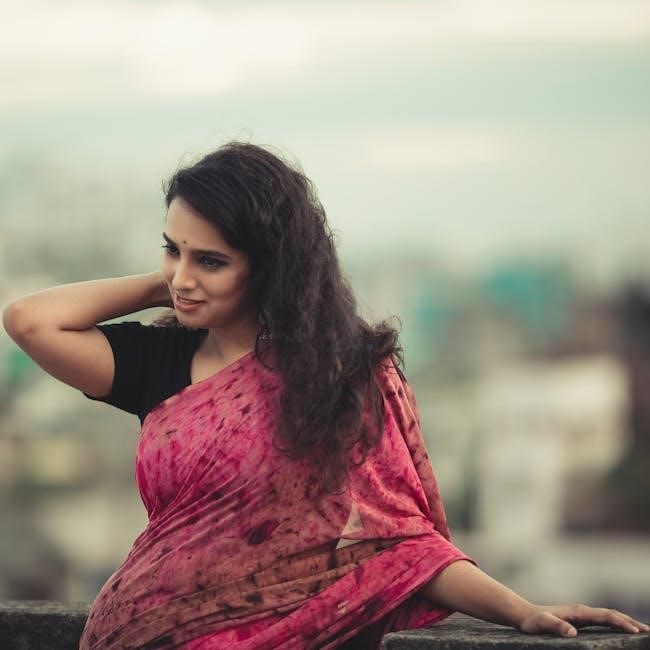
Decoding a Saree Blouse Measurement Chart PDF
PDF charts offer standard sizes and customization, catering to diverse body types and design preferences for a perfect, tailored saree blouse fit.
Standard Size Charts
Standard size charts within a saree blouse measurement chart PDF provide a quick reference for common body measurements. These charts typically categorize sizes using numerical designations (like 30, 32, 34) or lettered sizes (Small, Medium, Large).
However, it’s crucial to remember that sizing can vary significantly between manufacturers and even different blouse styles. A size 32 in one brand might not equate to the same fit in another.
These charts generally include bust, waist, and hip measurements corresponding to each size. Some charts also incorporate shoulder width and back neck depth. Always compare your individual measurements to the chart carefully, and don’t assume your usual size will automatically fit. Using these as a starting point is helpful, but customization is often necessary for a truly perfect fit.
Customization Options
A saree blouse measurement chart PDF often allows for customization beyond standard sizes, recognizing the diversity of body shapes. Many charts include spaces to input precise measurements for a tailored fit.
Options frequently include adjusting sleeve length, back neck depth, and blouse length – front and back. You can also specify preferences for shoulder width and armhole size.
Some charts even allow for adjustments based on specific design elements, like a preferred dart placement or a customized back style. When ordering online, look for options to provide these measurements directly. For tailoring, a detailed chart ensures clear communication with your seamstress, resulting in a blouse that perfectly complements your saree and flatters your figure.
Understanding Measurement Units (Inches vs. Centimeters)
Saree blouse measurement chart PDFs may present measurements in either inches or centimeters. It’s crucial to understand which unit is used to ensure accuracy when taking your own measurements or comparing them to a size guide.
Many charts include a conversion table for easy reference. If a chart uses inches, and you prefer centimeters, or vice versa, utilize this table to avoid errors.
Be consistent! Use the same unit throughout the entire process – don’t mix and match. Double-check the chart’s key to confirm the unit of measurement before recording any data. Accurate conversions are vital for a well-fitting blouse, whether purchased online or tailored locally.
How to Take Accurate Measurements
Accurate measurements are essential for a well-fitted saree blouse; using the PDF chart correctly requires precise body measurements taken with care.
Tools You’ll Need
Preparing to take accurate measurements for your saree blouse requires a few simple tools. A flexible measuring tape is absolutely essential; ensure it’s not stretched or damaged for reliable results.
Having a mirror is incredibly helpful, allowing you to view your body while measuring, especially for back measurements. It’s beneficial to have a friend or family member assist, particularly for measurements like the back neck depth or shoulder width, ensuring accuracy.
A pen and paper, or a digital note-taking device, are needed to record each measurement immediately. Consider wearing a well-fitting, non-padded bra during the process, as this will impact bust and waist measurements. Comfortable, fitted clothing is also recommended to avoid distorting the measurements.
Step-by-Step Measurement Guide
Begin with the bust measurement: wrap the tape around the fullest part of your chest, keeping it level. For waist measurement, find your natural waistline (usually the narrowest part) and measure around it.
Next, measure your hips at the fullest point, ensuring the tape is parallel to the floor. Shoulder measurement is taken from the edge of one shoulder to the other. Back neck depth is measured from the base of the neck to the desired blouse depth.
Sleeve length is measured from the shoulder point to the wrist. Record each measurement carefully, and double-check for accuracy. Consistent technique is key for a well-fitting blouse!
Getting Help with Measurements
Accurate measurements are crucial, but taking them yourself can be tricky! Don’t hesitate to enlist a friend or family member to assist, especially with back measurements. A second pair of eyes ensures the tape measure remains level and in the correct position.
If you’re still unsure, consider visiting a local tailor. They can professionally take your measurements and offer advice on achieving the best fit for your body type. Many online retailers also offer virtual fitting assistance or detailed guides.
Remember, a slightly inaccurate measurement can lead to an ill-fitting blouse, so seeking help is a worthwhile investment!
Finding and Downloading a Saree Blouse Measurement Chart PDF
Reliable online sources readily offer saree blouse measurement chart PDFs, providing structured documents to accurately determine your blouse size for a perfect fit.
Reliable Online Sources
Numerous websites specialize in Indian clothing and tailoring resources, offering downloadable saree blouse measurement chart PDFs. Look for established fashion retailers or platforms dedicated to saree customization. Many tailoring services also provide these charts as a free resource to help customers prepare for custom blouse orders.
Pinterest often hosts visually appealing and easily accessible charts pinned by various users and shops. Etsy, a marketplace for handmade and vintage items, frequently features sellers offering detailed measurement guides in PDF format. Always verify the source’s credibility and ensure the chart includes comprehensive measurements for a precise fit. Checking customer reviews can also indicate the chart’s accuracy and usefulness. Prioritize sources that offer charts in both inches and centimeters for broader accessibility.
PDF Chart Features to Look For
When selecting a saree blouse measurement chart PDF, prioritize clarity and comprehensiveness. A good chart will clearly label each measurement point – bust, waist, hips, shoulder, back neck depth, and sleeve length – with accompanying diagrams. Look for charts offering both inches and centimeters to accommodate different preferences.
Standard size charts are helpful, but a chart detailing how to take measurements accurately is crucial. Customization options, like space to record individual measurements, are beneficial. Ensure the PDF is well-organized and easy to read, avoiding cluttered layouts. A chart specifying measurements for different blouse styles (e.g., high neck, halter neck) adds extra value. Finally, a professionally designed chart indicates attention to detail and reliability.
Saving and Printing the PDF
Once you’ve downloaded your saree blouse measurement chart PDF, saving it to a readily accessible folder on your device is essential. Name the file descriptively – for example, “SareeBlouseMeasurements.pdf” – for easy retrieval. Most PDF viewers allow you to save the file locally.
For convenient use during measurements, printing the chart is recommended. Ensure your printer is set to the correct paper size and quality. Consider printing in color for better visibility of diagrams and labels. Laminating the printed chart can protect it from wear and tear, making it a durable reference tool. Keep the printed copy in your sewing or wardrobe area for quick access.
Using the Chart for Online Blouse Purchases
PDF charts help compare your body measurements to online size guides, ensuring a better fit and minimizing alterations when buying saree blouses.
Comparing Measurements to Online Size Guides
Online retailers often provide their own saree blouse size guides, which can differ significantly from standard charts. Carefully compare your measurements – bust, waist, and shoulder – taken using your PDF chart, with the specific measurements listed on the retailer’s website.
Pay close attention to whether the guide uses inches or centimeters, and convert accordingly. Don’t assume your usual size will fit; always measure! Look for detailed charts that include measurements for different blouse styles, as a fitted or loose-fitting blouse will require different dimensions.
If your measurements fall between sizes, it’s generally recommended to size up, allowing room for alterations. Understanding alteration options beforehand is also crucial for achieving the perfect fit.
Understanding Alteration Options
Even with accurate measurements from your saree blouse measurement chart PDF, some alterations may be necessary for a truly perfect fit. Common alterations include adjusting the shoulder straps, taking in or letting out the waist, and shortening or lengthening the sleeves.
Consider the complexity of the blouse design; heavily embellished blouses may have limited alteration possibilities. Factor in the cost of alterations when budgeting for your blouse.
Local tailors can provide expert advice on what alterations are feasible and how much they will cost. It’s wise to discuss alteration options before purchasing a blouse online, especially if you anticipate needing significant adjustments.
Saree Blouse Measurement Chart for Different Body Types
Saree blouse measurement charts PDF cater to diverse figures, offering specific sizes for petite and plus-size individuals, ensuring a flattering fit.
Petite Sizes
Petite sizes in saree blouse measurement charts PDF are specifically designed for individuals with a smaller frame, typically under 5’4”. These charts often feature adjusted shoulder measurements, shorter sleeve lengths, and a proportionally reduced overall blouse length.
When utilizing a PDF chart, petite individuals should pay close attention to shoulder width, as an ill-fitting shoulder can drastically affect the blouse’s drape. Sleeve lengths are also crucial; excessively long sleeves can overwhelm a smaller frame.
Furthermore, the blouse length should be adjusted to maintain proportion with the saree. Many PDF charts offer guidance on shortening the blouse for a more tailored look. Accurate bust and waist measurements remain essential, even in petite sizes, to ensure a comfortable and flattering fit.
Plus Sizes
Plus-size saree blouse measurement charts in PDF format are crucial for achieving a comfortable and flattering fit. These charts prioritize accurate bust and waist measurements, often including detailed hip measurements for a well-proportioned silhouette.
When using a PDF chart, focus on ensuring sufficient ease in the bust and waist, avoiding tightness that can compromise comfort. Shoulder measurements are also vital, as they influence the blouse’s overall drape and shape.
Sleeve length adjustments may be necessary for a balanced look. Many PDF charts provide guidelines for grading up sizes while maintaining proportional design elements. Don’t hesitate to compare measurements across multiple charts to find the best fit, and consider professional alterations for a truly customized result.