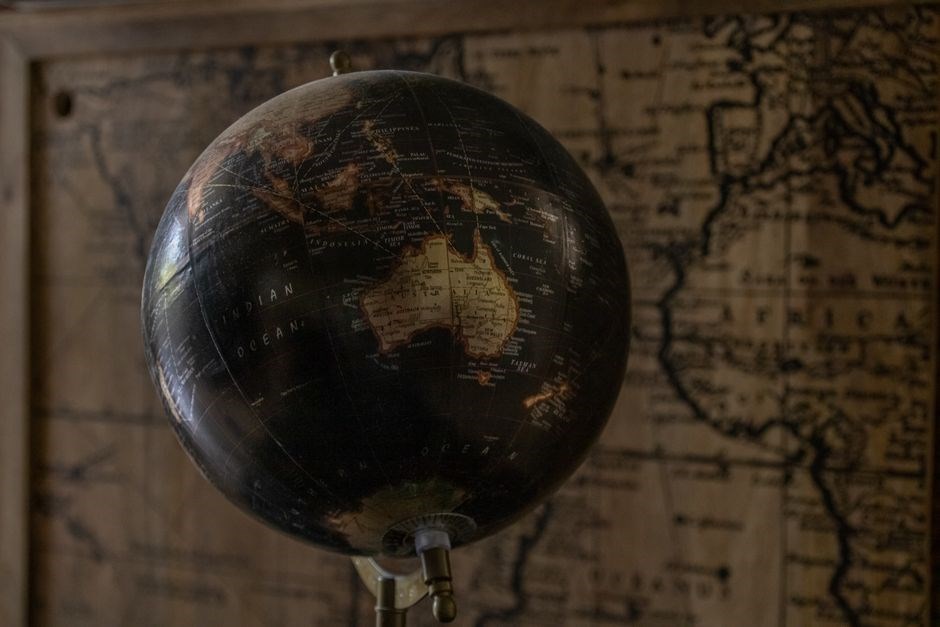
World history timelines provide a visual narrative from ancient civilizations to modern events. PDFs offer portable, searchable formats that preserve layout across devices. Users can zoom, highlight, and reference sources directly, making complex chronologies accessible for study and teaching.
Key Historical Periods Covered
Key historical periods in a world‑history PDF timeline are organized to guide readers through humanity’s major epochs. The earliest segment, “Early Civilizations (3150 BC – 476 AD),” charts the rise of Mesopotamia, Egypt, the Indus Valley, China’s Shang dynasty, and Greek city‑states, highlighting inventions such as writing, irrigation, and the wheel. The “Middle Ages (476 – 1492)” section captures the fragmentation of the Roman Empire, the spread of Christianity, Viking incursions, the Crusades, Islamic caliphates, and feudal Europe, framed by socio‑economic shifts that set the stage for later exploration. Moving forward, the “Renaissance and Exploration (1492 – 1700)” period showcases the rediscovery of classical knowledge, the birth of humanism, the Age of Discovery, and the scientific revolution, underscoring how trans‑Atlantic voyages reshaped global trade and cultural exchange. The “Industrial Revolution (1700 – 1900)” segment illustrates mechanization of production, urban migration, democratic ideals, and technological breakthroughs that accelerated global connectivity. Finally, the “Modern Era (1900 – Present)” covers the two World Wars, the Cold War, decolonization, the digital revolution, and geopolitical shifts, contextualized within a framework that emphasizes cause and effect. By segmenting the timeline into periods, the PDF offers a narrative that balances depth with readability, enabling educators, students, and enthusiasts to trace rich global societies from antiquity to the present.
Popular PDF Resources
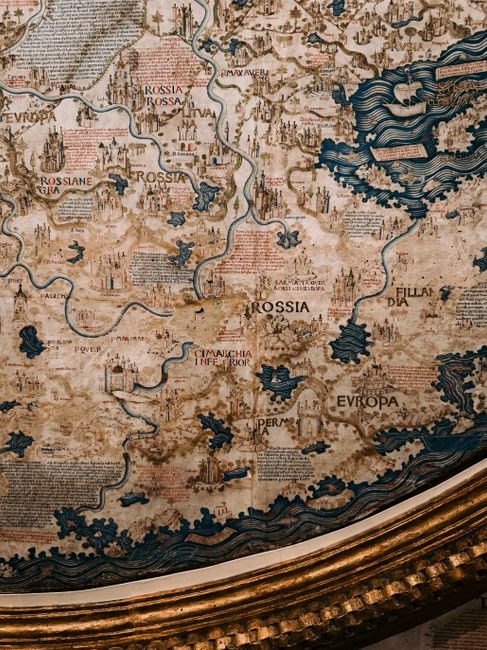
For scholars and hobbyists alike, several PDF compilations offer comprehensive visual timelines of world history. A notable example is the “World History Timeline” series published by Rand McNally in the mid‑20th century, which, despite its dated Eurocentric perspective, remains a staple in many libraries. The series presents a linear progression from 3150 BC to the present, with detailed annotations and color‑coded eras. More contemporary offerings include the interactive PDF found on WorldHistoryCharts.com, which provides a downloadable chart that spans from ancient civilizations through the modern era, complete with hyperlinks to primary sources. Another popular resource is the “Timeline of World History” PDF from UsefulCharts.com, a professionally designed graphic that can be printed or viewed on screen; the site also hosts a YouTube video (https://www.youtube.com/watch?v__BaaMfiD0Q) that explains the chart’s structure. For educators seeking a curriculum‑aligned tool, the “History Timeline” app on Android offers a light‑green icon interface that allows zooming, searching, and annotation, and its PDF export feature enables offline study. Users can also access the PDF via the Library, which offers annotations.
Digital Tools for Timeline Exploration
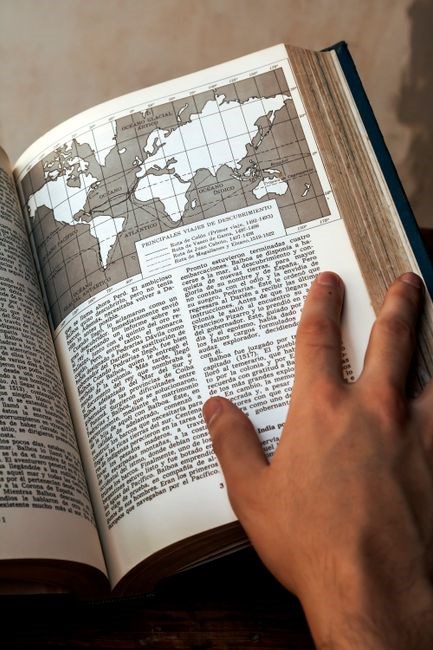
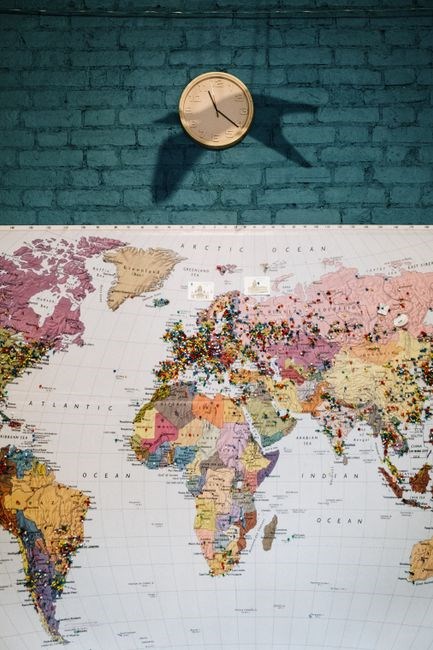
Digital platforms have transformed how users interact with world‑history PDFs. The Android “History Timeline” app, identifiable by its light‑green icon, offers pinch‑to‑zoom, full‑screen viewing, and keyword search, letting students drill from the Bronze Age to the 21st century. Its export feature produces a PDF that can be shared or printed, preserving the original layout. On desktop, Adobe Acrobat Reader’s “Search” and “Bookmarks” functions enable quick navigation through the 3150 BC‑to‑present chronology. Many PDFs embed hyperlinks to external databases such as the WorldHistoryCharts website, where users can click a date and be redirected to a detailed article or primary source. Interactive PDFs from UsefulCharts.com incorporate JavaScript sliders that animate the timeline, letting viewers see how events overlap across continents. For educators, the “Timeline of World History” PDF includes a built‑in “Table of Contents” that links to each era, and the PDF’s “Layers” feature allows instructors to toggle the visibility of specific civilizations, such as the Roman Empire or the Ming Dynasty. Accessibility tools like screen readers can interpret the PDF’s tagged structure, ensuring that visually impaired users can follow the chronological narrative. Finally, cloud‑based services such as Google Drive and Dropbox provide version control, so collaborators can annotate the same timeline simultaneously, making group projects on historical periods more efficient. Layer‑based annotations let users add notes without altering the original content!!
Future Trends in Timeline PDFs
Next‑generation PDFs will embed AI‑driven search, auto‑tagging, and overlays. Augmented reality links let users point a phone at a page to view 3‑D reconstructions. Cloud sync will enable real‑time collaborative editing and translation layers. Next steps.
Early Civilizations (3150 BC – 476 AD)
In the earliest era, the Sumerians in Mesopotamia pioneered cuneiform writing around 3500 BC, while the Indus Valley civilization flourished with advanced urban planning by 2600 BC. The Egyptian Old Kingdom, marked by the construction of the Great Pyramids, emerged circa 2686 BC, showcasing monumental architecture and centralized governance; Simultaneously, the Shang dynasty in China introduced oracle bone script, establishing one of the world’s oldest writing systems. By 1200 BC, the Mycenaean Greeks had developed Linear B tablets, evidencing early administrative records. The Minoan civilization on Crete, with its palatial centers and vibrant frescoes, thrived until the late Bronze Age collapse around 1450 BC. In sub‑Saharan Africa, the Nok culture produced terracotta sculptures, indicating sophisticated artistic traditions. The transition to the Iron Age around 1200 BC accelerated technological diffusion, enabling the rise of the Hittite Empire in Anatolia and the Assyrian Empire’s expansion. The Classical period, beginning with the Archaic Greek city‑states, introduced democracy, philosophy, and theater, influencing Western thought for millennia. In the East, the Zhou dynasty’s Mandate of Heaven concept legitimized rulership, while the Maurya Empire in India unified vast territories under Ashoka’s reign in the 3rd century BC, promoting Buddhism. The Roman Republic’s formation in 509 BC set the stage for the Empire, whose Pax Romana stabilized Europe, North Africa, and the Near East. These intertwined developments laid the foundations for subsequent cultural, political, and technological transformations that shaped the trajectory of human civilization. These milestones illustrate how early societies harnessed irrigation, metallurgy, and writing to build power and cultural identity, laying foundations for the knowledge that shapes our global heritage.
Middle Ages (476 – 1492)
From the fall of Rome in 476 AD to the onset of the Age of Discovery, the Middle Ages witnessed transformative shifts across continents. In Europe, the early medieval period saw the rise of Germanic kingdoms—Visigoths, Ostrogoths, and later the Frankish Empire under Charlemagne, who crowned himself emperor in 800 AD, reuniting much of Western Europe. The Carolingian Renaissance spurred a revival of learning, with monasteries preserving classical texts and promoting illuminated manuscripts. The feudal system crystallized, linking land ownership to military service and creating a rigid social hierarchy. The 11th and 12th centuries brought the Crusades, a series of religious wars that opened channels for trade and cultural exchange between Europe and the Islamic world, introducing Greek philosophy, Arabic science, and advanced metallurgy. The rise of universities in Bologna, Paris, and Oxford formalized scholastic inquiry, while the Black Death (1347–1351) decimated populations, reshaping labor markets and accelerating social mobility. In the Iberian Peninsula, the Reconquista culminated in 1492 with the fall of Granada, while the Catholic Monarchs initiated the Spanish Inquisition. Across the Mediterranean, the Byzantine Empire endured until 1453, preserving Greek heritage. In Asia, the Song and Yuan dynasties in China advanced printing technology, astronomy, and trade along the Silk Road, linking East and West. The Mongol Empire, under Genghis Khan, unified vast territories, facilitating unprecedented cross‑continental commerce and cultural diffusion. These interwoven developments forged the foundations of modern nation‑states, legal systems, and intellectual traditions, underscoring the Middle Ages as a crucible of continuity and change. The era’s legacy endures in contemporary institutions, legal codes, and cultural identities, illustrating how medieval structures continue to shape modern societies.
Renaissance and Exploration (1492 – 1700)
The period from 1492 to 1700 marks a pivotal convergence of artistic rebirth and global discovery. The Age of Discovery, sparked by Christopher Columbus’s 1492 voyage, opened sea routes to the Americas, while Ferdinand Magellan’s circumnavigation (1519‑1522) proved Earth’s roundness and linked the Atlantic and Pacific. European powers—Spain, Portugal, England, France, and the Dutch Republic—established overseas colonies, trading posts, and mercantile networks that reshaped global economies. The influx of New World silver and the rise of the Atlantic slave trade intensified wealth disparities and fueled the growth of mercantilism. In Europe, the Renaissance flourished, with figures such as Leonardo da Vinci, Michelangelo, and Raphael redefining art, while scholars like Erasmus and Thomas More challenged medieval scholasticism. The invention of the printing press by Johannes Gutenberg in the mid‑15th century amplified the spread of knowledge, making maps, scientific treatises, and literary works widely accessible. Scientific inquiry advanced through Copernicus’s heliocentric model (1543), Galileo’s telescopic observations (1609), and Kepler’s laws of planetary motion (1609‑1619), laying foundations for modern astronomy. The period also witnessed religious upheaval: Martin Luther’s 1517 Ninety‑Five Theses ignited the Protestant Reformation, leading to doctrinal schisms and the Thirty‑Year War (1618‑1648). In the Americas, indigenous societies such as the Aztec and Inca faced conquest, yet their cultural legacies persisted. Across Asia, the Ming dynasty’s maritime expeditions under Zheng He (early 15th century) had already demonstrated Chinese naval prowess, influencing later European navigation. By 1700, the world had become increasingly interconnected, setting the stage for the Enlightenment and the Industrial Revolution. Its legacy endures in art, science and global politics now.
Industrial Revolution (1700 – 1900)
The Industrial Revolution, spanning 1700 to 1900, reshaped societies through mechanization, urbanization, and global trade. Key milestones include James Watt’s 1765 steam engine, the 1769 textile innovations in Manchester, and the 1804 invention of the first practical steam locomotive by George Stephenson. These advances accelerated production, lowered costs, and spurred migration from rural areas to burgeoning factories. The era also saw the rise of railways, telegraphy, and iron‑clad warships, which integrated markets and facilitated colonial expansion. In the United States, the 1861–1865 Civil War accelerated industrial capacity, while the 1870s “Second Industrial Revolution” introduced steel, electricity, and chemical processes. The period’s social impact was profound: labor reforms, the emergence of unions, and the spread of public education. Meanwhile, global resources were exploited to fuel growth, leading to environmental changes and the early foundations of modern capitalism. Digital PDF compilations, such as those hosted on worldhistorycharts.com, provide interactive timelines that allow users to zoom, search, and cross‑reference events. These PDFs preserve formatting across devices, ensuring that scholars and students can access consistent visual representations of the era’s complex chronology. The legacy of the Industrial Revolution continues to shape contemporary technology, economic structures, and cultural narratives. PDFs aid global teaching.!

Modern Era (1900 – Present)
The Modern Era (1900–present) marks a period of rapid technological, political, and social transformation. World War I (1914–1918) reshaped borders and introduced mechanized warfare. The interwar years saw totalitarian regimes, the Great Depression, and World War II (1939–1945), ushering in the atomic age. Post‑war reconstruction birthed the United Nations, the Marshall Plan, and the Cold War, a bipolar standoff that fueled space exploration, nuclear proliferation, and proxy conflicts. The 1960s and 1970s brought civil rights movements, decolonization, and the Vietnam War; the 1980s witnessed the fall of the Berlin Wall and the dissolution of the Soviet Union in 1991, signaling a new global order. Rapid digitalization, the rise of the internet, and smartphones reshaped communication, commerce, and social interaction in the late 20th and early 21st centuries. Globalization intensified economic interdependence, yet sparked debates over inequality, climate change, and cultural homogenization. The COVID‑19 pandemic of 2020 highlighted vulnerabilities in health systems and supply chains, prompting renewed focus on public health and resilience. Emerging technologies such as artificial intelligence, renewable energy, and quantum computing promise transformative potential, while geopolitical tensions in the Middle East, Eastern Europe, and Indo‑Pacific continue to shape international relations. PDF timelines of this era provide interactive, searchable visual narratives that allow educators, researchers, and the public to trace complex events, analyze causal links, and contextualize contemporary challenges within a broader historical continuum. These resources enable comparative studies across epochs, fostering critical thinking and global awareness among learners worldwide. Interactive annotations enhance engagement and collaborative learning. Future insights await.
Chronological Accuracy and Sources
Ensuring precise dates and reliable references is essential for any world‑history PDF. Scholars rely on primary documents—archaeological finds, contemporaneous chronicles, and diplomatic archives—to anchor events. Secondary analyses, such as peer‑reviewed journal articles and reputable history monographs, refine these anchors by contextualizing them within broader socio‑political trends. Digital databases (e.g., JSTOR, Project MUSE, and the World Digital Library) provide open access to both primary and secondary materials, allowing cross‑verification of dates and interpretations. When compiling a timeline, editors cross‑check each entry against at least two independent sources to mitigate bias or transcription errors. For periods with sparse documentation—such as pre‑historical eras—scholars use relative dating techniques (radiocarbon, dendrochronology) and comparative linguistic studies to estimate timelines. Modern technologies, like GIS mapping and digital annotation tools, help visualize spatial relationships and temporal sequences, making discrepancies more apparent. Transparency is maintained by citing all source material in a standardized bibliography, often following APA or Chicago style. Users can trace each event back to its origin, fostering critical engagement and discouraging the propagation of myths. In the PDF format, hyperlinks embedded in the text point directly to digital copies of primary documents or scholarly articles, enabling instant verification. This rigorous approach to chronology and sourcing ensures that the timeline remains a trustworthy educational resource for students, researchers, and history enthusiasts alike. See now!!.
User‑Friendly Features (Zoom, Search)
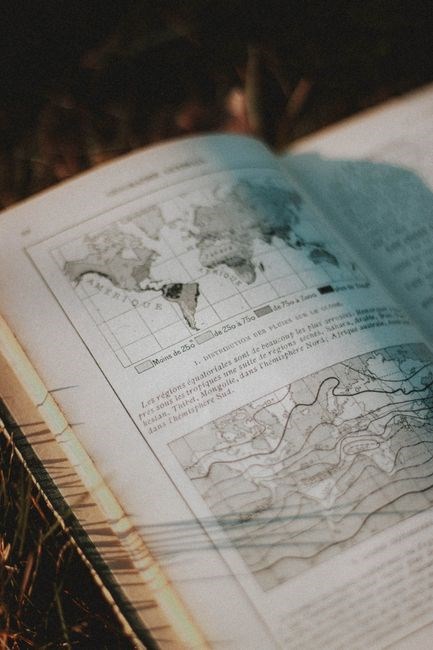
Modern PDF timelines are designed for interactivity. Users can zoom in to examine fine details or zoom out for a global view. Search functions allow quick navigation to specific years, events, or keywords. Many PDFs embed hyperlinks that link directly to source documents or external references, enabling instant verification. The combination of scalable vector graphics and searchable text ensures that the timeline remains legible on any screen size, from smartphones to large monitors. Additionally, bookmarks and table‑of‑contents entries provide a hierarchical structure, letting readers jump between eras or thematic sections. Some publishers include a built‑in timeline slider, letting users slide through centuries with a simple drag action. Accessibility features such as adjustable font sizes, high‑contrast modes, and screen‑reader compatibility further broaden the audience. These tools collectively transform a static document into an engaging learning platform, encouraging exploration and deeper understanding of world history.
The PDF format supports embedded multimedia, such as audio narrations and video clips, enhancing engagement for learners. Users can annotate directly on the timeline, adding notes or highlighting key events. Many platforms allow exporting annotations to other formats, facilitating collaboration among educators. Moreover, the PDF can be signed digitally, ensuring content integrity and data safety.!!
Accessibility and Distribution Channels
PDF timelines are distributed through multiple channels, ensuring wide reach. Major academic publishers host downloadable files on institutional repositories, while open‑access portals like University Press offer free versions. Digital libraries such as JSTOR, Project MUSE, and Google Scholar provide secure access, often behind institutional logins. Mobile app stores host interactive PDF viewers that support zoom, search, and annotation, making the timelines usable on Android and iOS devices. Social media platforms and educational blogs embed links or use QR codes to direct students to the latest editions. Some publishers partner with e‑learning platforms (e.g., Coursera, Khan Academy) to embed PDFs within course modules, allowing seamless navigation. Accessibility is enhanced by features like screen‑reader compatibility, adjustable contrast, and alt‑text descriptions for key events. The PDF/UA standard ensures that the document meets WCAG 2.1 AA guidelines, enabling users with visual impairments to navigate the timeline. For multilingual audiences, PDFs include language tags and offer downloadable translations. Finally, the use of a DOI (Digital Object Identifier) guarantees a persistent link, simplifying citation and long‑term preservation. By integrating accessibility features, publishers ensure learners worldwide can engage with narratives regardless of device, language, or ability, preserving collective memory for future generations for all now!